Please Scroll Down to See Forums Below
napsgear
genezapharmateuticals
domestic-supply US-PHARMACIES UGL OZ
Raptor Labs UGFREAK OxygenPharm
napsgeargenezapharmateuticals domestic-supplyUS-PHARMACIES UGL OZUGFREAKRaptor LabsOxygenPharm

The Superbowl Parade thead

  • Thread starter Thread starter Spartacus
  • Start date Start date
As I expected the parade was up to snuff and beyond....4evergreat did an awesome job....samaritan endeavour indeed, not to mention that after the parade I entered the millionaire club in terms of K...
 
Nobledude said:
As I expected the parade was up to snuff and beyond....4evergreat did an awesome job....samaritan endeavour indeed, not to mention that after the parade I entered the millionaire club in terms of K...
a couple of million left to give away
the parade turns down the steriod boulevard
you can do that when you create a thread
 
cityhall_crowd.jpg
 
hey guys I had a blood panel pulled last month
I'm 44 and natural
test is between 2.8-8
I had 9.84
free test was midrange
let that be a lesson to you
 
needtogetas said:
fuckin' prolactin was one
normal is like 3-18
but that's the selegiline
5mg EOD
I do meridia 15mg the opposite days
works like a charm
the doc scripted my methodology to me after I explained
the meridia doesn't loose it's effectiveness if you "space" it out
fuck this
this is not what I'me here for
 
same man murdered in 1976
the last official casuality of the second world war
his home in france of all places was ambushed by a fringe french group
they found spent cartridges by his burnt out side along with his dead german shepherd
and blood trails amongst the leaves in the forest
 
Kharkov

The LSSAH spent the remainder of 1942 refitting as a panzergrenadier division. Thanks to the efforts of the ReichsfĂĽhrer-SS, along with SS-ObergruppenfĂĽhrer Paul Hausser, the SS-Panzerkorps commander, the four SS panzergrenadier divisions (LSSAH, Wiking, Das Reich and Totenkopf were to be formed with a full regiment of tanks rather than only an Abteilung. This meant that the SS Panzergrenadier divisions were full-strength Panzer divisions in all but name. Also, the division received nine Tiger 1 tanks, and these were formed into 13.(schwere)Kompanie/SS-Panzer-Regiment 1.

The collapse of the front around Stalingrad and the encirclement of the 6.Armee meant that the entire eastern front was close to collapse. Generalfeldmarschall Erich von Manstein, commander of Army Group Don, requested reinforcements to halt the Soviet attack near Kharkov. The SS-Panzerkorps was ordered east to join Manstein's forces.

Arriving at the front in late January 1943, the LSSAH was thrown into the line defending Kharkov itself as a part of Hausser's SS-Panzer-Korps. Facing them were the hundreds of T-34s of Mobile Group Popov, a Soviet armoured Army sized formation which formed the spearhead of the Soviet advance. On 8-9 February, 1943, the LSSAH's SS-Panzergrenadier-Regiment 1 under SS-SturmbannfĂĽhrer Fritz Witt, fighting alongside SS-SturmbannfĂĽhrer Max WĂĽnsche's I./SS-Panzer-Regiment 1, fought a bitter delaying action near the town of Merefa, halting a major Soviet attack. The division fought in many desperate defensive battles over the next few weeks, gradually being pushed back into the city of Kharkov itself.
SS-Panzergrenadiers of Kampfgruppe Witt in the Kharkov outskirts, March 1943.

Despite inflicting heavy losses on the Soviets, and rebuffing all enemy attacks, the Soviets succeeded in outflanking the corps. On 15 February, Hausser ignored Hitler's orders to hold the city at all costs and ordered the SS-Panzer-Korps to abandon the city and withdraw towards Krasnograd. Over the next week, the SS-Panzer-Korps annihilated Mobile Group Popov in a series of brilliant and hard fought battles. The LSSAH was a major participant in these battles, destroying several Soviet divisions and inflicting heavy losses.

Hausser now ordered that Kharkov should be recaptured. The LSSAH, Das Reich and Totenkopf were to form the spearhead of the attack. The attack got underway on 2 March. The LSSAH was formed into three Kampfgruppen which would attack towards and capture Kharkov. Over the next weeks, the LSSAH would take part in the ferocious battles to take the city. Kampfgruppe Meyer, under Panzermeyer's command, penetrated to Red Square before being cut off. Kampfgruppe Witt saw heavy fighting against a Soviet blocking force near Dergatschi before it also broke through into the city. Both Kampfgruppen were repeatedly cut off during the confused fighting, and it was not until Kampfgruppe Peiper, under Joachim Peiper, broke through that the defenders were finally overwhelmed. By 21 March, the battle was over and Kharkov was back in German hands, with Peiper's Kampfgruppe having penetrated as far as Belgorod.

In honour of the 4,500 casualties suffered by the Leibstandarte in the fighting, Kharkov's Red Square was renamed Platz der Leibstandarte SS Adolf Hitler. The division was pulled back for much needed rest and refit.

[edit] Kursk
 
supposedly the same man responsible for the malmedy massacre
he was furiously defended in post-war trials by a british lawyer
he endured about 19 mock hangings
 
4everhung said:
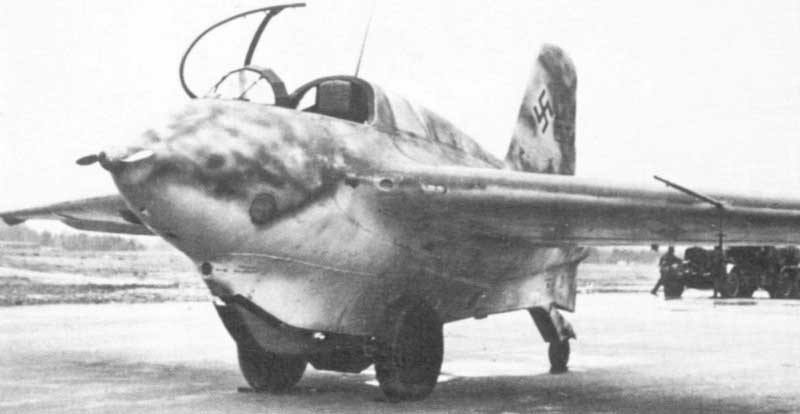
late war even the highest general in charge of Germany's fighter planes got into the cockpit of an ME-262
jagdverband-44
the best pilots were needed to control this jet aircraft
 
Spool time on the engines were a bitch at low rpm.

T-37 is like that too - at low RPM a spoiler comes out on the wing, forcing you run at a higher thrust setting so you can have a faster throttle response.

Nothing worse than slamming the throttle forward and waiting for the engine to spool up. That will add grey hairs mighty fast.
 
Despite inflicting heavy losses on the Soviets, and rebuffing all enemy attacks, the Soviets succeeded in outflanking the corps. On 15 February, Hausser ignored Hitler's orders to hold the city at all costs and ordered the SS-Panzer-Korps to abandon the city and withdraw towards Krasnograd. Over the next week, the SS-Panzer-Korps annihilated Mobile Group Popov in a series of brilliant and hard fought battles. The LSSAH was a major participant in these battles, destroying several Soviet divisions and inflicting heavy losses.

Papa Hausser
34s3qki.jpg


most of my 500 some odd WWII books are authored by Brits and Americans
learn from the best
 
You might have read this one - Overy's "Why the Allies One" - balanced book.

For a good quick read on airpower during the French campaign in '44, "XIX Tactical Air Command and UTLRA" - by Shwedo
 
there were done some "marshall" studies at the end of the war
what they found was that out of a typical 40 man platoon engaged in combat
only 2 out of 40 was effectively firing his weapon
half the other were firing wildly up in the air etc.
the other half hugging the dirt praying to mom etc

don't pass this band of brothers hollywood crap off on me
 
4everhung said:
there were done some "marshall" studies at the end of the war
what they found was that out of a typical 40 man platoon engaged in combat
only 2 out of 40 was effectively firing his weapon
half the other were firing wildly up in the air etc.
the other half hugging the dirt praying to mom etc

don't pass this band of brothers hollywood crap off on me

Yeah, I remember reading some of those studies - a few carried the majority of the load
 
Marshall was hastily named Secretary of Defense in 1950 in an effort to restore morale after the disastrous tenure of Secretary Louis A. Johnson. He served in that post for less than one year, retiring from politics for good in 1951 after Senator Joseph McCarthy made a speech on the Senate floor stating that "if Marshall was merely stupid, the laws of probability would dictate that part of his decisions would serve America's interests."
 
jnuts said:
Yeah, I remember reading some of those studies - a few carried the majority of the load
the Germans recognized this and focused their squad tactics on protecting and feeding their excellent machine gun
recognizing too that a crew served weapon operates better under combat cause you got a buddy there with you to pat you on the back
in Vietnam the US Army adopted German small squad tactics
M-60
 
jnuts said:
The distinctive sound of the MG-42. Awesome weapon.
MG-34 and then MG-42
watch Cross of Iron filmed in 1976 by Sam Peckinpah to get an idea of the value of the MG-42
Russians coming in from all over and the few Germans protect their MG emplacement
that was their chance
stars James Coburn
 
This is old school, but I used to play a lot of the Avalon Hill Squad Leader series of games when I was a wee one. Nice way to learn about the capabilites of the various machinery.
 
4everhung said:
MG-34 and then MG-42
watch Cross of Iron filmed in 1976 by Sam Peckinpah to get an idea of the value of the MG-42
Russians coming in from all over and the few Germans protect their MG emplacement
that was their chance
stars James Coburn

Gruesome flick. I remember the scene where there was an ill advised blow job that went bed.

BTW, thanks for the K bump, I'll end up betting it all away :)
 
It's a tragedy, really, because this fine, often overlooked action-drama deserved much, much better.
Cross Of Iron is a powerful, offbeat antiwar film with a literate script, featuring interesting performances. War is not an adventure in this story. There is no heroicism on the muddy, bloody Golgotha of the Eastern Front. There is only the crucifixion of the ordinary German landser on the altar of Hitler's madness. Based on the 1956 novel by World War II veteran Willi Heinrich, this European co-production was filmed in English by acclaimed American director Sam Peckinpah (The Wild Bunch, Straw Dogs). Set in southern Russia in 1943, the story follows the embittered German Sergeant Steiner (James Coburn, in one of his strongest dramatic roles) as he and the men of his platoon struggle to survive both the attacking Red Army and the scheming duplicity of their own glory-hungry battalion commander, the haughty, aristocratic Captain Stransky (Maximilian Schell). Steiner hates officers, especially incompetent ones, and makes the mistake of openly showing disdain for Stransky. A terrible 'friendly fire' incident ensues when the captain deems it advantageous for his career if Steiner's men don't make it back from behind enemy lines.
Expect the slow-motion ballets of death that Peckinpah is most famous for in combination with his unusual editing style. Pacing flags in the middle but direction is solid throughout. Authenticity is first-rate; the movie was shot on location in Yugoslavia (a good stand-in for the Soviet Union) using historically accurate weapons. A must-see for anyone interested in World War II's Russian Front — a very rare subject of English-language cinema. (Can you you name another English-language Ostfront film besides 2001's Enemy At The Gates?)
 
I can't remember the name of the one - it was on the eastern front. The guys all die at the end due to the cold. Battling against T-34s. I think it's a different flick, but maybe that was Iron Cross.
 
jnuts said:
I can't remember the name of the one - it was on the eastern front. The guys all die at the end due to the cold. Battling against T-34s. I think it's a different flick, but maybe that was Iron Cross.
Stalingrad
in this pic I participated with a German rennectment unit
I'm in the center
the guy to my left is US military
he was the leader
he's in Iraq now


2ytnxwh.jpg
 
The Ardennes: Battle of the Bulge/Chapter VIII - Wikisource
sector. The 560th Volks Grenadier Division (Generalmajor Rudolf Langhaeuser) was assigned two specific bridges as targets, one just north of Ouren, the other a stone arch a little to the
south of the village. Because surprise was essential in this stroke for the bridges, artillery fire on the American forward positions in the first moments of the assault was forbidden.
l The heavy barrage and the pyrotechnic display which opened elsewhere on the 28th Division front on 16 December was viewed at first with some detachment by the men at the 112th
observation posts. They heard, and duly reported, heavy artillery to the south, they saw searchlights and flames lighting up the sky, but again in the south. About 0620, however, the 1st
Battalion phoned to say that shells were coming over the battalion command post. The German guns and Werfers had finally opened fire to neutralize or destroy the rearward artillery and
reserve positions in the 112th sector. As the enemy gun layers dropped their range back to the river and then to the American positions, the searchlights blinked on, searching out pillboxes
and bunkers. When daylight came, the German infantry already were stealing through the draws behind and around the forward platoons, aiming to assemble in the wooded areas to the
rear.14
l The 3d Battalion (Maj. Walden F. Woodward), in the regimental center, was hit by the 1130th Regiment of the 560th Volks Grenadier Division. This German blow fell on either side of
Sevenig, held by Company L. The American barbed wire line had not been completed across the draws to the north and south of the village; through these gaps the shock companies
advanced. The company leading the left battalion surprised a platoon of Company L at breakfast, overran the company kitchen (which was only 800 to goo yards behind the rifle line) and
killed the platoon commander. Leaderless, the platoon broke. A part of the German company, perhaps a platoon in strength, succeeded in reaching the stone bridge over the Our south of
Ouren, but was dispersed.
l The bulk of the 3d Battalion held their positions despite surprise, defending from pillboxes and foxholes. Later the Americans in this sector reported that the attackers must have been
"awfully green"-as indeed they were. The enemy attempt to capture or destroy the American command posts, kitchens, and observation posts was only partially successful, although the
grenadier assault parties were well inside the 3d Battalion positions when day broke. Two company kitchens were captured and one or two observation posts cut off, but the artillery
observer inside Sevenig was able to direct the 229th Field Artillery howitzers onto the Germans in the draw. Meanwhile the mortar crews took a hand from their foxholes on the hill behind
Sevenig, dropping mortar shells into the hollows where the Germans congregated or picking them off with carbines.
l Early morning reports of considerable German penetration and the threat to the Our bridges in the 3d Battalion area led the regimental commander to put one of his counterattack plans into
operation. At 0930 two companies of the 2d Battalion (Lt. Col. J. L. MacSalka) assembled in a draw between Ouren and Lieler (west of the river), crossed the bridges the German patrol at
the stone bridge had evaporated under machine gun fire-and moved toward Sevenig. The Germans in the way quickly withdrew to the east. By nightfall the 3d Battalion line on the Sevenig
ridge had been restored while the commander of the 1130th reported that his regiment, despite many attempts, had not been able "to get going."
l The main effort launched by the LVIII Panzer Corps on 16 December was assigned the 116th Panzer Division. This attack aimed at the bridges near Burg Reuland (in the 106th Division
sector) and Oberhausen, in the rear of the positions manned by the left battalion of the 112th. General Waldenburg committed his infantry here, in the predawn hours, hoping that the 60th
Regiment would break through on the right or that the 156th Regiment would reach the river on the left and so secure a bridgehead through which his tank regiment could be passed. The
lay of the ground and defenses in the area north of LĂĽtzkampen were such that Waldenburg's right regiment had to move northwestward at an oblique to the axis of his left wing advance.
l In common with the German assault tactics employed all along the front on 16 December, both regiments led off with a predawn advance by shock companies eighty men strong. The
company from the 60th ran into trouble almost immediately when it was immobilized in some woods northwest of Berg by flanking fire from Heckhuscheid, in the 424th Infantry sector.
Later reports indicate that this group was almost wiped out. The assault company from the 156th was initially more fortunate in its advance west of LĂĽtzkampen. By 0630 the grenadiers
were behind the command post of the 1st Battalion (Lt. Col. William H. Allen) in Harspelt; the first sign of their presence was a kitchen truck ambushed while journeying to the rear. The
advance party of grenadiers had moved along the wooded draw between the two companies holding the 1st Battalion line.
l When day came the Americans caught the troops following the advance party of the assault company out in the open. Interlocking machine gun and rifle fire blocked off the German
reinforcements some sixty were captured and the rest dug in where they could. Company D, in its support position on the high ground overlooking LĂĽtzkampen, meanwhile commenced
mopping up the enemy who had filtered between the companies on the line. By noon Company D had so many prisoners that it "couldn't handle them all!" Nonetheless some part of the
assault wave had broken through as far as the battery positions near Welchenhausen, where they were repelled by the .50-caliber quadruple mounts of the antiaircraft artillery.
l Shortly before noon the advance guard of the 60th Panzer Regiment, rolling along the LĂĽtzkampen-Leidenborn road, appeared on the knoll west of LĂĽtzkampen. The seven tanks counted
here strangely enough made no effort to attack (perhaps the rough terrain and dragon's teeth along the American bunker line did not appear too promising) . After a brief pause they wheeled
back into LĂĽtzkampen. 15 About dark infantry from LĂĽtzkampen attacked in close order formation against Company B. Maps picked up from dead Germans showed that the American
machine gun positions had been exactly plotted-but as they had existed up to a change made just before the 16th. The enemy made three attacks in the same close formation over the same
ground before they discovered the error of their ways. Company B, however, had been badly shot up during the engagement and probably somewhat shaken by the presence of two or three
flame-throwing tanks-a new experience to most American troops on the Western Front. Nevertheless by midnight the 1st Battalion front had quieted down, although there still were small

http://en.wikisource.org/wiki/The_Ardennes:_Battle_of_the_Bulge/Chapter_VIII (14 of 24)2/5/2007 10:32:24 PM


This guy was a hero... Led the first successful retailation at the Battle of the Bulge... I dated one of his granddaughters for a few years.
 
that was volksgrenadiers
nice sounding named units
but old men and boys
mantuefels 5th panzer army reached their Meuse river objectives
creating the so-called bulge
the germans had to employ their old men and boy divisions to hold the breakthrough
their front line troops were at the front
not in the rear shootting up prisoners at malmedy
 
4everhung said:
that was volksgrenadiers
nice sounding named units
but old men and boys
mantuefels 5th panzer army reached their Meuse river objectives
creating the so-called bulge
the germans had to employ their old men and boy divisions to hold the breakthrough
their front line troops were at the front
not in the rear shootting up prisoners at malmedy

I understand your point, but still... It was the beginning of something much bigger. That deserves some merit...

:beer:
 
even Oliver North didn't have his fact correct team on it
he said "5th Panzer Divsion" instead of 5th Panzer Armee
there's quite a difference
nice little special he had
 
4everhung said:
even Oliver North didn't have his fact correct team on it
he said "5th Panzer Divsion" instead of 5th Panzer Armee
there's quite a difference
nice little special he had

You know your shit, bro... Seriously. Much respect.
 
jnuts said:
This is old school, but I used to play a lot of the Avalon Hill Squad Leader series of games when I was a wee one. Nice way to learn about the capabilites of the various machinery.
Curt Schilling the Red Sox pitcher and likely future hall of fame inductee
bought the rights to Squad Leader

he's into all the old school military history games/simulations
 
Spartacus said:
Few of us have one defining day in our life, one for which we forever will be remembered. Gale Sayers does: Dec. 12, 1965.

It was a wet, bone-chilling, see-your-breath day in Chicago. Sayers, a rookie halfback for the Bears, tied the NFL mark for most touchdowns in a game by scoring six against the San Francisco 49ers in a classic contest that has been featured many times in fuzzy, black-and-white TV highlights.

Despite the fuzz, fans remember it vividly. So does Sayers. It's difficult to forget a day spent sloshing knee-deep through the mud.

Sayers had a lot of magnificent days; enough to land him in the Pro Football Hall of Fame at age 34, the youngest inductee ever. Packing them into a short career makes them even more remarkable. In seven seasons (only 68 games because of two devastating knee injuries), Sayers collected honors more representative of a life's work.

"His days at the top of his game were numbered, but there was a magic about him that still sets him apart from the other great running backs in pro football," Pulitzer Prize-winning sportswriter Red Smith wrote. "He wasn't a bruiser like Jimmy Brown, but he could slice through the middle like a warm knife through butter, and when he took a pitchout and peeled around the corner, he was the most exciting thing in pro football."

The 6-foot, 200-pound Sayers was the 1965 Rookie of the Year after scoring 22 touchdowns, an NFL record that would stand 10 years and still is the rookie mark. He would only play three more full seasons, and in two of them, he would lead the NFL in rushing. Named to the Pro Bowl in each of his first five seasons, he was voted the outstanding back of those games three times.

A severe left knee injury in 1970 effectively ended his career. After playing only two games in 1971, he was finished at 28. In his career, he had gained 6,213 yards running and receiving and scored a total of 56 touchdowns, including eight on kickoff and punt returns. He averaged 5.0 yards a run on his 991 carries (for 4,956 yards). He had set seven NFL records and 23 team marks.

But numbers are simply inadequate to describe Sayers. Better to focus on his elusive moves. His hips gyrated like an exotic dancer's. Sportswriters called him "the football version of the three-card monte" -- now you see him, now you don't -- and "a movable feast."

Bears coach George Halas, who had seen many sensational backs (including the legendary Red Grange, who ran wild 40 years before Sayers), said, "Gale detects daylight. The average back, when he sees a hole, will try to bull his way through. But Gale, if the hole is even partly clogged, instinctively takes off in the right direction. And he does it so swiftly and surely that the defense is usually frozen."

Besides finding holes, Sayers was noted for his "cuts," changing direction and eluding tacklers without losing speed.

Even comedian Bill Cosby weighed in: "He is the man who splits himself in half and leaves the half without the football with the tackler."

Sayers was born on May 30, 1943 in Wichita, Kan. He grew up in Omaha, Neb., the son of a car polisher and mechanic. A star running back at Omaha Central High School, more than 75 colleges offered him scholarships. Sayers said he chose Kansas because he liked coach Jack Mitchell and it was close to home.

Sayers also ran track at Kansas, competing in the high hurdles, 100-yard-dash and even setting a school record for the long jump at 24-10 1/2. But it was on the gridiron that "The Kansas Comet" truly excelled, being a two-time All-American (1963 and 1964). He rushed for 2,675 yards in his Kansas career, including setting the NCAA record for the longest run from scrimmage, 99 yards against Nebraska in 1963.

Sayers was drafted by the Kansas City Chiefs in the AFL and the Bears in the NFL (fourth overall pick, immediately after Chicago selected another All-American, linebacker Dick Butkus). Despite a more lucrative offer from the Chiefs, Sayers chose the Bears, even though he described their counter-offer as "$4.95 and a carton of Cokes."

In his fifth game, Sayers scored four touchdowns in a 45-37 victory over the Minnesota Vikings. He did even better two months later in the Bears' 61-20 rout of the 49ers, with his six touchdowns equaling the record set by the Chicago Cardinals' Ernie Nevers in 1929 and tied by the Cleveland Browns' Dub Jones in 1951.

His scores came in a variety of ways: 80-yard screen pass, runs of 21, 7, 50 and 1 yards, and an 85-yard punt return. He accounted for 336 yards -- 113 rushing, 89 on receptions and 134 on punt returns.

For his rookie season Sayers accumulated 2,272 yards rushing, receiving and returning kickoffs and punts. In 1966, he ran for a career-high 1,231 yards in the 14-game season, winning the rushing title.

Two years later, though, his world fell apart. Midway through the 1968 season, in the midst of his best campaign to date, the 49ers' Kermit Alexander took out Sayers, who suffered a ruptured cartilage and two torn ligaments in his right knee. He was out for the season.

"The injury was only serious because they had to saw through muscles and nerves," said Sayers. "If they'd had arthroscopic techniques in those days, I'd have been back in a couple of weeks."

Despite the seriousness of the injury, Sayers began the slow process of rehab and physical therapy. He returned to the Bears' lineup in 1969 and ran for 1,032 yards, winning his second rushing title. He also was awarded the George Halas Award as "the most courageous player in professional football."

At the awards presentation, Sayers dedicated his prize to his friend and teammate, Brian Piccolo, who was dying of cancer. The story of his friendship with Piccolo was later immortalized in the 1971 made-for-TV movie "Brian's Song," which starred James Caan as Piccolo and Billy Dee Williams as Sayers. In his 1973 autobiography, "I am Third," Sayers also detailed his friendship with Piccolo.
I still have to award the half million karma prize
dont jerk the thread
 
Top Bottom