Please Scroll Down to See Forums Below
napsgear
genezapharmateuticals
domestic-supply
puritysourcelabs
UGL OZ
UGFREAK
napsgeargenezapharmateuticals domestic-supplypuritysourcelabsUGL OZUGFREAK

Hanoi Jane speaks out at rally

redguru

New member
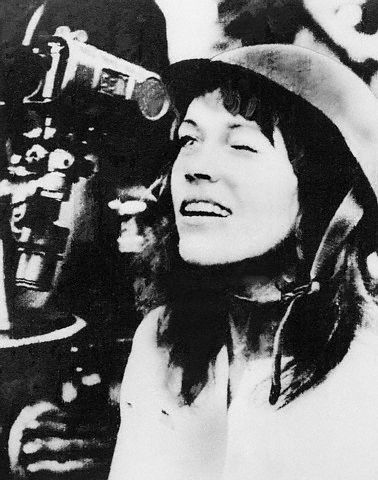
hanoijane.jpg


This is Jane Fonda. During my two week visit in the Democratic Republic of Vietnam, I've had the opportunity to visit a great many places and speak to a large number of people from all walks of life--workers, peasants, students, artists and dancers, historians, journalists, film actresses, soldiers, militia girls, members of the women's union, writers.

I visited the (Dam Xuac) agricultural coop, where the silk worms are also raised and thread is made. I visited a textile factory, a kindergarten in Hanoi. The beautiful Temple of Literature was where I saw traditional dances and heard songs of resistance. I also saw unforgettable ballet about the guerrillas training bees in the south to attack enemy soldiers. The bees were danced by women, and they did their job well.

In the shadow of the Temple of Literature I saw Vietnamese actors and actresses perform the second act of Arthur Miller's play All My Sons, and this was very moving to me--the fact that artists here are translating and performing American plays while US imperialists are bombing their country.

I cherish the memory of the blushing militia girls on the roof of their factory, encouraging one of their sisters as she sang a song praising the blue sky of Vietnam--these women, who are so gentle and poetic, whose voices are so beautiful, but who, when American planes are bombing their city, become such good fighters.

I cherish the way a farmer evacuated from Hanoi, without hesitation, offered me, an American, their best individual bomb shelter while US bombs fell near by. The daughter and I, in fact, shared the shelter wrapped in each others arms, cheek against cheek. It was on the road back from Nam Dinh, where I had witnessed the systematic destruction of civilian targets-schools, hospitals, pagodas, the factories, houses, and the dike system.

As I left the United States two weeks ago, Nixon was again telling the American people that he was winding down the war, but in the rubble-strewn streets of Nam Dinh, his words echoed with sinister (words indistinct) of a true killer. And like the young Vietnamese woman I held in my arms clinging to me tightly--and I pressed my cheek against hers--I thought, this is a war against Vietnam perhaps, but the tragedy is America's.

One thing that I have learned beyond a shadow of a doubt since I've been in this country is that Nixon will never be able to break the spirit of these people; he'll never be able to turn Vietnam, north and south, into a neo-colony of the United States by bombing, by invading, by attacking in any way. One has only to go into the countryside and listen to the peasants describe the lives they led before the revolution to understand why every bomb that is dropped only strengthens their determination to resist.

I've spoken to many peasants who talked about the days when their parents had to sell themselves to landlords as virtually slaves, when there were very few schools and much illiteracy, inadequate medical care, when they were not masters of their own lives.

But now, despite the bombs, despite the crimes being created--being committed against them by Richard Nixon, these people own their own land, build their own schools--the children learning, literacy--illiteracy is being wiped out, there is no more prostitution as there was during the time when this was a French colony. In other words, the people have taken power into their own hands, and they are controlling their own lives.

And after 4,000 years of struggling against nature and foreign invaders--and the last 25 years, prior to the revolution, of struggling against French colonialism--I don't think that the people of Vietnam are about to compromise in any way, shape or form about the freedom and independence of their country, and I think Richard Nixon would do well to read Vietnamese history, particularly their poetry, and particularly the poetry written by Ho Chi Minh.
 
David Hoffman, a former POW who was shot down over North Vietnam in 1971, said that he had been tortured because of Fonda's visit to Hanoi. "The torture resulted in a permanent injury that plagues me to this day," says Hoffman, who suffers a disfigured arm inflicted by brutal communist guards at the POW camp known as the "Zoo."

"When Jane Fonda turned up, she asked that some of us come out and talk with her," he recalled bitterly. "No one wanted to. The guards got very upset, because they sensed the propaganda value of a famous American war protestor proving how well they were treating us.

"A couple of guards came to my cell and ordered me out. I resisted, and they got violently angry. My arm had been broken when I was shot down, and the Vietnamese broke it a second time. It had not healed well, and they knew it caused me great pain. "They twisted it. Excruciating pain ripped through my body.

"Still I resisted and they got more violent, hitting me and shouting, 'You must go!' I knew there was a limit to which I could push them before they might actually kill me.

"I was dragged out to see Fonda. I decided to play the role. I knew if I didn't, not only would I suffer - but the other guys would be tortured or beaten or worse. "When I saw Fonda and heard her antiwar rhetoric, I was almost sick to my stomach. She called us criminals and murderers.

"When I had to talk to the camera, I used every phony cliche I could. My arm hung limply at my side, and every move caused me pain which showed in my face. \

"When it was over, Fonda unbelievably did not see through the ruse - or she didn't want to. I was taken away politely - then shoved back into my cell.

"I detested Jane Fonda then and I detest her now - but I would fight to the death to protect her right to say what she thinks.

"What she did was a slap in the face to every American. It was wrong, ill-advised and stupid. But it was her right. Unfortunately, it was not my right to refuse to be seen with her.

"There is no way I will ever forget what she did to me. I have the reminder here - in an arm that can never be normal again.
 
mountain muscle said:
Why exactly has she never been tried for treason?


I think she could be legally tried for sedition according to the Constitution. She made propaganda radio broadcasts for the enemy while in Hanoi.
 
gotmilk said:
she did this shit again last week claiming Iraq is just like Vietnam

I know, that's why I brought this up. the video of her speech at the Iraq rally is at youtube. I was looking for a transcript.
 
Treason? I don't know about that. She protested the war. I don't see why that's treason. She didn't sell secrets, take bribes, or out a operational CIA operative.
 
This is a partial transcript of "The Big Story With John Gibson," January 29, 2007, that has been edited for clarity.

JOHN GIBSON, HOST: Hanoi Jane making a comeback. Actress Jane Fonda is back to her old anti-war antics. For the first time in 34 years she spoke out at an anti-war protest in Washington over the weekend. The protest scene looks familiar, but Fonda was even more outspoken about the Vietnam War, dubbed Hanoi Jane after going to North Vietnam in the 70s, she cozied up to the enemy, even took pictures with communist troops. This time around Hanoi Jane has not traveled to visit the enemy behind the lines, which probably means she likes her head attached to her shoulders. But once again she has raised the question, why can't stars just stick to what they know, like movies, like TV and stay out of this stuff. With me now reality TV star Danny Bonaduce, you can hear him on 97.1 FREE FM Radio in Los Angeles. So Danny, let me show a picture then and now. Then was back in the 70s, that's Jane sitting on a — I think it's actually the late 60s.

DANNY BONADUCE, REALITY TV STAR: I can't see it.

GIBSON: Let me describe it for you. This is a famous...

BONADUCE: I think I can describe it for you without seeing it. She's sitting on an anti-aircraft gun with the barrel pointing up with I believe three Vietcong next to her and she's looking up with a smile about this big on her face?

GIBSON: And she has a helmet on.

BONADUCE: That's how — I haven't seen that picture in 20 years and I won't forget it because of the indelible mark that made on me.

GIBSON: And now she was speaking out about the Iraq war over the weekend in Washington. Some people put the number in the hundreds of thousands; our best estimate is like 30,000 people showed up. Do you have a problem with this, Jane Fonda reappearing?

BONADUCE: No I don't. In the words of Voltaire, if you will, I may not believe in what you say, but I'll defend to the death your right to say it. So I'm with her that she gets to say whatever she wants. Here is where my problem lies, it's probably a little harsh. Any speech Jane Fonda gave after 1972 in my opinion should have been posthumously. It is my true belief and I believe this 100 percent and I will not back up from it, that Jane Fonda gave aid and comfort to the enemy which carries more weight, some low level CIA agent sneaking a couple of files of antiquated weapon systems we don't even use any more or one of America's top stars sitting on a Vietcong's anti-aircraft gun? That's the one that does — she should have been tried for treason and at that time the punishment was to be taken out and shot by firing squad and that’s what I think should have happened to Jane Fonda.

GIBSON: Let's take a trip down memory lane. The Jane Fonda changes through the years Danny. There have been a lot of them. Of course, first up, Barbarella. The Roger Vadim movie, she was young, she was gorgeous, she was a star. Then, you know, comes the sitting on the gun that you just described. A little bit later, she was the aerobics queen. Then, she was a big Democratic political person in California with her then husband Tom Hayden, the state legislature. And the she was Mrs. Ted Turner. And now she is war protesting again. Is it fair to say that she's an actress and she's made her living as an actress or an aerobiciser or whatever and this really isn't her public business?

BONADUCE: Well, anything you want to make public is your public business. But what my problem is and it's not just Jane Fonda, I have a personal distaste for Jane Fonda from my childhood, from that moment in that photograph. So — and I will never forgive her. But take people who I actually like, like Alec Baldwin who said if President Bush is elected the president of the United States, I'll leave the country. Well how can you accuse my president of lying to me if you are lying to me? You didn't go any where Alec, you stayed in New York City and fought with your wife. You want me to help you move, I'll come pack you up.

GIBSON: What do you think it means — you know I seemed to have grown up watching Jane Fonda go through these antics...

BONADUCE: Me too.

GIBSON: And none of it is very surprising, but she was quiet for a long time and suddenly as she said after 34 years, she's out again. How come?

BONADUCE: Well I think in all honesty I think she absolutely believes in what she says and I think there is great confusion over this particular war. My wife's little brother, I refer to him as my brother because I've known him since he was a tiny little child. He is on his second tour in Iraq and he just got hit again. Everybody else in the vehicle is dead, he just has shrapnel down his right side. So I am polarized in my opinion about the war. There are people, radio talk show hosts, those kind of people, it's their job to only have one opinion, they can't tell you about their feelings. They have to go with what pays their bills. I believe Jane Fonda believes in what she was saying and she has a right to say it. Just if I were in charge, she'd be saying it from a prison cell from 1972 on.

GIBSON: Danny Bonaduce, don't forget you can listen to him on 97.1 FREE FM radio in Los Angeles. Danny thanks very much, good to see you.

BONADUCE: Thank you so much. It is always a pleasure.
 
EnderJE said:
Treason? I don't know about that. She protested the war. I don't see why that's treason. She didn't sell secrets, take bribes, or out a operational CIA operative.

Sitting in an enemy aa gun for pics is treason. Being photographed in propaganda photos for the enemy is treason.
 
mountain muscle said:
Sitting in an enemy aa gun for pics is treason. Being photographed in propaganda photos for the enemy is treason.
Clearly, we define treason differently then as I don't really see either as that damaging then the items listed in my post. If there's an official definition that validates yours, then I'm with you. If not, then we agree to disagree.
 
EnderJE said:
Clearly, we define treason differently then as I don't really see either as that damaging then the items listed in my post. If there's an official definition that validates yours, then I'm with you. If not, then we agree to disagree.

Section 3.


Treason against the United States, shall consist only in levying War against them, or in adhering to their Enemies, giving them Aid and Comfort. No Person shall be convicted of Treason unless on the Testimony of two Witnesses to the same overt Act, or on Confession in open Court.
 
mountain muscle said:
Section 3.


Treason against the United States, shall consist only in levying War against them, or in adhering to their Enemies, giving them Aid and Comfort. No Person shall be convicted of Treason unless on the Testimony of two Witnesses to the same overt Act, or on Confession in open Court.
Okay. I'm with you. She should be hung. Well, for that and the bad movies that my wife made me see over the years.

However, using that same definition, then shouldn't the Red Cross and any humanitarian effort fall under the same sword?
 
EnderJE said:
Okay. I'm with you. She should be hung. Well, for that and the bad movies that my wife made me see over the years.

However, using that same definition, then shouldn't the Red Cross and any humanitarian effort fall under the same sword?

Are the Red Cross a citizen? Do they give aid to the enemy?

I like your attempt to confuse the issue but she should have been tried a long time ago.


BTW I got that little gem from the Constitution.
 
Her opinions and activism, whether you agree with them or not, are the highest form of protected speech under the constitution-- political speech. Don't mess with that. It isn't treason. It is free speech. If you don't agree with her, call her names, protest, whatever. That is your right to free speech, too.

No treason here.
 
heatherrae said:
Her opinions and activism, whether you agree with them or not, are the highest form of protected speech under the constitution-- political speech. Don't mess with that. It isn't treason. It is free speech. If you don't agree with her, call her names, protest, whatever. That is your right to free speech, too.

No treason here.

it's only free speech when your in the US doing it.
 
heatherrae said:
Her opinions and activism, whether you agree with them or not, are the highest form of protected speech under the constitution-- political speech. Don't mess with that. It isn't treason. It is free speech. If you don't agree with her, call her names, protest, whatever. That is your right to free speech, too.

No treason here.

We are talking about her past. She commited treason period.
 
heatherrae said:
Her opinions and activism, whether you agree with them or not, are the highest form of protected speech under the constitution-- political speech. Don't mess with that. It isn't treason. It is free speech. If you don't agree with her, call her names, protest, whatever. That is your right to free speech, too.

No treason here.

She gave aid and comfort to the enemy by broadcasting messages to our troops from Hanoi a la "Tokyo Rose".
 
heatherrae said:
Her opinions and activism, whether you agree with them or not, are the highest form of protected speech under the constitution-- political speech. Don't mess with that. It isn't treason. It is free speech. If you don't agree with her, call her names, protest, whatever. That is your right to free speech, too.

No treason here.

Hanging out with the enemy and wearing one of its helmet could be seen as treason. Again, it all depends on how you see it.
 
manny78 said:
Hanging out with the enemy and wearing one of its helmet could be seen as treason. Again, it all depends on how you see it.

No manny. she provided aid to the enemy propaganda machine. She is a criminal living in our country.
 
mightymouse69 said:
it's only free speech when your in the US doing it.
LOL....ummmm...no. If you are going to have the jurisdiction to try to convict someone of a crime and they use freedom of speech as a defense, you can't argue that you have venue to charge the offense in the United States but the same actions can't serve as a defense to the action. It doesn't work that way. That would be like if someone had a concert in Europe and was on trial in America for obsenity and the prosecutor saying that they can't bring their defense of freedom of speech because it occured overseas.
 
heatherrae said:
LOL....ummmm...no. If you are going to have the jurisdiction to try to convict someone of a crime and they use freedom of speech as a defense, you can't argue that you have venue to charge the offense in the United States but the same actions can't serve as a defense to the action. It doesn't work that way. That would be like if someone had a concert in Europe and was on trial in America for obsenity and the prosecutor saying that they can't bring their defense of freedom of speech because it occured overseas.

Heather, she violated the constitution by giving propanda aid to the enemy. Period.
 
mountain muscle said:
No manny. she provided aid to the enemy propaganda machine. She is a criminal living in our country.
How did she provide aid to the enemy? By going over there and speaking to them and saying she opposes the war? You may think that makes her a shitty American. I'm not saying I think she was right in what she did. I think she should have protested in America if she felt that way but that she went to far in going over there. However, it is FAR from rising to the level of treason.
 
While state-side Fonda helped to organize a group known as the FTA. It was the subversive's answer to the USO shows. The FTA set up coffee houses near military bases, where anti-American and anti-military skits were performed for the troops. After the show, the G.I.'s were encouraged to desert their units. Many troops alleged that the FTA members promised them money and new jobs if they went AWOL.
 
heatherrae said:
How did she provide aid to the enemy? By going over there and speaking to them and saying she opposes the war? You may think that makes her a shitty American. I'm not saying I think she was right in what she did. I think she should have protested in America if she felt that way but that she went to far in going over there. However, it is FAR from rising to the level of treason.

NO HR, being photgraphed in an aa gun with an enemy helmet on is not protected under free speach.
 
redguru said:
While state-side Fonda helped to organize a group known as the FTA. It was the subversive's answer to the USO shows. The FTA set up coffee houses near military bases, where anti-American and anti-military skits were performed for the troops. After the show, the G.I.'s were encouraged to desert their units. Many troops alleged that the FTA members promised them money and new jobs if they went AWOL.

FTA stands for Fuck The Army
 
heatherrae said:
LOL....ummmm...no. If you are going to have the jurisdiction to try to convict someone of a crime and they use freedom of speech as a defense, you can't argue that you have venue to charge the offense in the United States but the same actions can't serve as a defense to the action. It doesn't work that way. That would be like if someone had a concert in Europe and was on trial in America for obsenity and the prosecutor saying that they can't bring their defense of freedom of speech because it occured overseas.

Perhaps you should read the debate before you think it is that simple.

When Does Speech Become Treason?
by Henry Mark Holzer

When Michael Moore’s twisted anti-Bush jeremiad, Fahrenheit 9/11, was released, many Republicans, conservatives, and generally decent people had strong negative reactions. There were calls by some that Moore be prosecuted for treason, the drumbeat amplifying and echoing as it careened through the World of the Right. The reaction was understandable from an emotional perspective, but made no sense otherwise. Moore’s film was an exercise, albeit a thoroughly dishonest one, in protected speech. While “pure speech” (i.e., speech not combined with action) can mutate into treason, even the worst political speech, standing alone, does not come close to constituting treason.

To answer the question I’ve posited—When does speech become treason?—it is necessary to understand something about the history of speech in the United States.

Of all our constitutional guarantees, the First Amendment’s protection of speech is probably the best known, but the least understood. Contrary to popular belief, the speech guarantee was never intended to allow, nor has it ever allowed, absolutely free speech in America.

The Massachusetts constitution of 1780, adopted only four years after the Declaration of Independence, contained a free-speech guarantee. Yet between 1799 and 1803 there were at least three political libel convictions in that commonwealth. The Pennsylvania and Delaware constitutions of 1790 and 1792, respectively, enacted at virtually the same time as the First Amendment (1791), expressly imposed liability for “abuse” of free speech. In the same vein, Virginia—home of Washington, Jefferson, Madison, Patrick Henry, and John Marshall—enacted a law in 1792 dealing with the “abusive” exercise of speech.

Jefferson—author of the Declaration of Independence and third president of the United States—was not a free-speech absolutist. When, in a letter to Abigail Adams, he condemned the notorious Sedition Act of 1798—which punished certain political speech and actually sent not a few anti-Federalist editors to jail—Jefferson’s opposition was based on a “states’ rights” position, not on any belief in an unconditional right of free speech. On the contrary, he contended that “[t]he First Amendment…reflected a limitation upon Federal power, leaving the right [sic] to enforce restrictions on speech to the States.” (Emphasis added.)

As to the states, in 1803 Jefferson wrote to the governor of Pennsylvania recommending that “a few prosecutions of the most prominent [Federalist editor] offenders would have a wholesome effect in restoring the integrity of the presses. Not a general prosecution, for that would look like a persecution; but a selected one.”

Two hundred years later, oppressive governmental attitudes toward speech had not changed much. During World War I, an antiwar activist named Schenck distributed a handbill. One side claimed that the Conscription Act constituted slavery and involuntary servitude in violation of the Thirteenth Amendment. On the other side there was more of the same, including a paraphrase of the Ninth Amendment (“The enumeration in the Constitution of certain rights shall not be construed to deny or disparage others retained by the people”).

Schenck and others were indicted for conspiring to violate the Espionage Act by causing insubordination and obstructing recruitment. They were not indicted for treason. Their defense was the First Amendment. They were found guilty, and their convictions were unanimously upheld by the Supreme Court. Justice Holmes famously wrote that “[w]hen a nation is at war many things that might be said in time of peace are such a hindrance to its effort that their utterance will not be endured so long as men fight . . . .” It is noteworthy that even though Holmes, and his eight Supreme Court colleagues, believed that war justified suspension of free speech in certain contexts, nowhere in the Court’s opinion is there even a hint that Schenck could have been charged with treason.

The Schenck case was important not only because it ruled that during a war even pure speech could be suppressed for the “common good,” but because the decision became the foundation for the Court’s infamous “Smith Act” decision three decades later.

In that case, members of the Communist Party of the United States were indicted, not for having committed violent acts, but for having conspired (i.e., agreed): “(1) to organize as the Communist Party of the United States of America a society . . . of persons who . . . advocate the overthrow and destruction of . . . the United States by force and violence, and (2) knowingly and willfully to advocate . . . the duty and necessity of overthrowing and destroying . . . the United States by force and violence.” They were not indicted for treason. As in the Schenck decision, the subject of treason never arose.

And with good reason. Although speech—even political speech, let alone pornography, defamation, or commercial speech—has never been fully free in the United States, it is an impossible stretch, logically and constitutionally, to attempt to punish speech with indictment and conviction for treason.
There are just three crimes expressly mentioned in the Constitution.
Article I, Section 8, gives Congress power to punish counterfeiting, and to define and punish piracy, but neither offense is actually defined.

However, Article III, Section 3, spells out that: “Treason against the United States, shall consist only in levying War against them, or in adhering to their Enemies, giving them Aid and Comfort. No Person shall be convicted of Treason unless on the Testimony of two Witnesses to the same overt Act, or on Confession in open Court.”

Not until 1945 did the Supreme Court of the United States review a treason conviction. Cramer v. United Stateswas the first. Seven other cases followed, two in the Supreme Court and five in United States courts of appeal: Haupt v. United States, Chandler v. United States, Gillars v. United States, Best v. United States, Burgman v. United States, D’Aquino v. United States, and Kawakita v. United States.

Cumulatively, in these eight decisions arising from World War II the federal courts established that for a prosecutor to obtain a treason conviction he must prove four elements beyond a reasonable doubt: (1) an overt act, (2) testified to by two witnesses, (3) manifesting an intent to betray the United States (which can be inferred from the overt act itself), and (4) providing aid and comfort to the enemy.

Note that not one of these essential elements requires a speech component.

Gillars provides an example of what an overt act can consist of in a treason prosecution. The indictment against Gillars (“Axis Sally,” to her Nazi employers) alleged, in part:

. . . [t]hat on a day between January 1, 1944 and June 6, 1944, the exact date to the Grand Jurors being unknown, said defendant, at Berlin, Germany, did speak into a microphone in a recording studio of the German Radio Broadcasting Company, and thereby did participate in a phonographic recording and cause to be phonographically recorded a radio drama entitled “Vision of Invasion,” said defendant then and there well knowing that said recorded radio drama was to be subsequently broadcast by the German Radio Broadcasting Company to the United States and to its citizens and soldiers at home and abroad as an element of German propaganda and an instrument of psychological warfare. (Emphasis added.)
In Kawakita the Supreme Court of the United States addressed the second requirement for a treason conviction, two-witness proof:

Each witness who testified [against Kawakita] to an overt act was, however, an eye-witness to the commission of that act. * * * This overt act . . . was testified to by thirteen witnesses. * * * But they all agreed that [Kawakita] struck Grant. * * * There is no doubt . . . the witnesses were all talking about the same incident and were describing the same conduct on [Kawakita’s] part. (Emphasis added.)
As to the “intent to betray” element of the crime of treason, the Supreme Court in Cramer noted that:

There was ample evidence for the jury that Cramer had a treasonable intent. The trial court charged the jury that “criminal intent and knowledge, being a mental state, are not susceptible of being proved by direct evidence, and therefore you must infer the nature of the defendant’s intent and knowledge from all the circumstances. * * * So if you believe that the defendant performed acts which by their nature gave aid and comfort to the enemy, knowing or believing him to be an enemy, then you must find that he had criminal intent, since he intended to do the act forbidden by the law. * * * The consequences of his acts are too serious and enormous to admit of such a plea. He must be taken to intend the consequences of his own voluntary act . . . . For the same reasons a man cannot slip through our treason law because his aid to those who would destroy his country was prompted by a desire to “accommodate a friend.” (Emphasis added.)
The final element of a treason case is that the defendant’s conduct provided “aid and comfort” to an enemy of the United States. In Cramer, the Supreme Court observed that “[t]he very minimum function that an overt act must perform in a treason prosecution is that it shows sufficient action by the accused, in its setting, to sustain a finding that the accused actually gave aid and comfort to the enemy.” (Emphasis added.) The same was true in Chandler, where the court had to decide whether the prosecution adduced enough evidence from which the jury could reasonably have concluded Chandler’s overt act(s) had provided the constitutionally requisite “aid and comfort” to the Nazi regime. Chandler claimed that not one of the alleged overt acts—by themselves—provided aid and comfort to the Nazi’s goals.
The court of appeals disagreed:

* * * These services consisted not merely of the culminating act of making a recording, but also of the necessary preliminary acts directed to that end. They were all part and parcel of the totality of aid and comfort given by the course of conduct as a whole. Attending a conference of commentators, at the summons of the Chief of the U.S.A. Zone, in order that directives as to the current propaganda line might be relayed and discussed and individual assignments made, could reasonably be found to have been of aid and comfort to the enemy. The proof under overt acts 4 and 5 established Chandler’s participation in two such conferences. (Emphasis added.)
At this point it is useful to repeat the constitutional definition of treason: “Treason against the United States, shall consist only in levying War against them, or in adhering to their Enemies, giving them Aid and Comfort. No Person shall be convicted of Treason unless on the Testimony of two Witnesses to the same overt Act, or on Confession in open Court.”
Which brings us to the most notorious post–World War II case of treason, Hanoi Jane Fonda.

When Erika Holzer and I published “Aid and Comfort”: Jane Fonda in North Vietnam several years ago, I appeared on The O’Reilly Factor with Fonda’s former husband and still-apologist, Tom Hayden. After I blasted Fonda for giving aid and comfort to our Communist enemies, all Hayden could stammer in response was that she was exercising her “right to free speech.” The facts are otherwise.

In July 1972, while American servicemen were fighting and dying in Vietnam, Fonda traveled to Hanoi, the capital of Communist North Vietnam. Her activities there included not only making propaganda broadcasts (tapes of which were played incessantly to American prisoners of war) but also meeting with senior Communist civilian and military leaders (at which time she condemned the United States and lauded the Communists). In addition, she held press conferences (at which she viciously attacked this country and its leaders); she provided the North Vietnamese with “photo opportunities” (the most notorious showed her perched at the controls of an anti-aircraft gun, looking through the gun sight at an imaginary American plane); and she conducted “interviews” with seven American POWs (whom she harangued about their “war crimes”).

The Fonda episode provides an eloquent answer to the question posed in this essay: “When does speech become treason?”

It is not when World War I resisters leaflet against recruitment. Nor when domestic Communists—whom Justice William O. Douglas called “miserable merchants of unwanted ideas, whose wares remain unsold”—agree to organize and, later, to advocate. And in today’s America, it certainly is not when an intellectually sleazy propagandist like Michael Moore creates a Goebbels-like filmic distortion of his political opponents and their beliefs.

Speech becomes treason when it transcends mere words, ceasing to be communication alone, and satisfies the four requisites demanded by the Supreme Court: (1) an overt act, (2) testified to by two witnesses, (3) manifesting an intent to betray the United States (which can be inferred from the overt act itself), and (4) providing aid and comfort to the enemy.

Thus, while the Michael Moores receive a free-speech pass, the Fondas do not. Nor should have the most recent American to escape a treason indictment, Taliban John Walker. Some of his apologists and defenders claimed that Walker’s sojourn with the Taliban was merely the exercise of a constitutional right akin to free speech—namely, the right of association, also guaranteed by the First Amendment.

Here is just some of what Walker did:

He crossed from Pakistan into Afghanistan to join the Taliban.
He presented a letter of introduction to the Taliban telling them that he, an American, wanted to fight for them.
He agreed to al-Qaeda training, knowing that the terrorist organization intended to kill Americans.
He traveled to, and stayed in, a bin Laden guest house.
He trained at an al-Qaeda camp, knowing that bin Laden had sent some fifty terrorists on suicide missions against the United States.
He met personally with bin Laden, receiving the terrorist’s thanks for having joined jihad.
He met with a senior al-Qaeda leader to discuss where he would fight.
He traveled to Kabul, where he was issued a weapon.
He marched, armed, to the front with approximately 150 non-Afghan fighters under the command of an Iraqi.
He fought Northern Alliance troops.
He was under arms for four or five months.
He remained with his fighting comrades after learning about the terrorist attacks of September 11, knowing that bin Laden had planned the attacks, that additional attacks were planned, and that the terrorist training camps were sending troops to the front to protect bin Laden.
He remained with his fighting comrades from October through December 2001, after learning that United States military forces and other United States nationals were fighting in support of the Northern Alliance in its war with the Taliban and al-Qaeda.
He retreated to Kunduz with his fighting comrades, surrendered, and was trucked to the Qala-i Janghi prison.
He was in the prison, and complicit, when Taliban detainees attacked CIA agent Mike Spann and his colleague, overpowered the guards, armed themselves, and killed Spann.
He retreated, though wounded, with other detainees to a basement. He remained in the basement for about a week with other Taliban and al-Qaeda fighters, until forced out.
Applying these facts to the Supreme Court’s four-element legal template for the crime of treason, it is clear Walker could have been indicted for, and convicted of, that crime. Surely, a jury could have found in Walker’s conduct at least one overt act. Surely, from that act, a jury could have inferred that Walker possessed the requisite intent to harm the United States. Surely, a jury could have concluded that the overt act(s) provided aid and comfort to an enemy of the United States. And surely—somewhere among the countless members of the United States military and CIA, FBI agents, troops of the Northern Alliance, American and foreign journalists, Taliban fighters, and even al-Qaeda terrorists—federal prosecutors could have found two witnesses to at least one of Walker’s overt acts.

Just as Hanoi Jane Fonda is the poster girl for treason during the Vietnam War era, Taliban John Walker is the poster boy for treason during the current War on Terror.

Yet neither of them were indicted for treason, even though whatever speech (or association) they engaged in far transcended mere words, ceasing to be communication alone and satisfying beyond a reasonable doubt the four requisites demanded by the Supreme Court for a treason conviction: (1) an overt act, (2) testified to by two witnesses, (3) manifesting an intent to betray the United States (which can be inferred from the overt act itself), and (4) providing aid and comfort to the enemy.

Because Fonda and Walker crossed the bright moral and legal line separating speech from treason, they should have been indicted for, and convicted of, the latter. In not doing so, our government twice sent the wrong message.

If I have one regret from my radical years, it is that this country was too tolerant towards the treason of its enemies within. If patriotic Americans had been more vigilant in the defense of their country, if they had called things by their right names, if they had confronted us with the seriousness of our attacks, they might have caught the attention of those of us who were well-meaning, if utterly misguided. And they might have stopped us in our tracks. (David Horowitz, president of the Center for the Study of Popular Culture, editor of Front Page Magazine—and former co-editor of the Sixties-era Ramparts magazine; emphasis added.)

While the reader ponders the serious implications of that revelation, I would add only a few words, written some five hundred years ago: “Treason doth never prosper: what’s the reason? For if it prosper, none dare call it treason.”
Nor should we call it speech.

Henry Mark Holzer, professor emeritus at Brooklyn Law School, is a constitutional and appellate lawyer. His latest book, to be published this year, is Keeper of the Flame: The Supreme Court Jurisprudence of Justice Clarence Thomas.

 
redguru said:
While state-side Fonda helped to organize a group known as the FTA. It was the subversive's answer to the USO shows. The FTA set up coffee houses near military bases, where anti-American and anti-military skits were performed for the troops. After the show, the G.I.'s were encouraged to desert their units. Many troops alleged that the FTA members promised them money and new jobs if they went AWOL.
meh

Not treason. Protest.

I don't even like her. I'm just saying.
 
Once South Vietnam was defeated, Fonda was invited back to be honored by the communist government. She returned as a conquering hero. She even brought along her newborn child. Her son was christened in honor of a Viet Cong criminal, named Nguyen Van Troi. Troi tried to assassinate U.S. Secretary of Defense Robert McNamara. Jane Fonda's son is named Troy.
 
heatherrae said:
meh

Not treason. Protest.

I don't even like her. I'm just saying.

Sen. John McCain (R-AZ) was held as a POW in North Vietnam for six years, after his plane was shot down over enemy territory. McCain says that he was beaten mercilessly for refusing to meet with Jane Fonda. She has made the claim on many occasions that American POW's were "hypocrites and liars."
 
mightymouse69 said:
Perhaps you should read the debate before you think it is that simple.

When Does Speech Become Treason?
by Henry Mark Holzer

When Michael Moore’s twisted anti-Bush jeremiad, Fahrenheit 9/11, was released, many Republicans, conservatives, and generally decent people had strong negative reactions. There were calls by some that Moore be prosecuted for treason, the drumbeat amplifying and echoing as it careened through the World of the Right. The reaction was understandable from an emotional perspective, but made no sense otherwise. Moore’s film was an exercise, albeit a thoroughly dishonest one, in protected speech. While “pure speech” (i.e., speech not combined with action) can mutate into treason, even the worst political speech, standing alone, does not come close to constituting treason.

To answer the question I’ve posited—When does speech become treason?—it is necessary to understand something about the history of speech in the United States.

Of all our constitutional guarantees, the First Amendment’s protection of speech is probably the best known, but the least understood. Contrary to popular belief, the speech guarantee was never intended to allow, nor has it ever allowed, absolutely free speech in America.

The Massachusetts constitution of 1780, adopted only four years after the Declaration of Independence, contained a free-speech guarantee. Yet between 1799 and 1803 there were at least three political libel convictions in that commonwealth. The Pennsylvania and Delaware constitutions of 1790 and 1792, respectively, enacted at virtually the same time as the First Amendment (1791), expressly imposed liability for “abuse” of free speech. In the same vein, Virginia—home of Washington, Jefferson, Madison, Patrick Henry, and John Marshall—enacted a law in 1792 dealing with the “abusive” exercise of speech.

Jefferson—author of the Declaration of Independence and third president of the United States—was not a free-speech absolutist. When, in a letter to Abigail Adams, he condemned the notorious Sedition Act of 1798—which punished certain political speech and actually sent not a few anti-Federalist editors to jail—Jefferson’s opposition was based on a “states’ rights” position, not on any belief in an unconditional right of free speech. On the contrary, he contended that “[t]he First Amendment…reflected a limitation upon Federal power, leaving the right [sic] to enforce restrictions on speech to the States.” (Emphasis added.)

As to the states, in 1803 Jefferson wrote to the governor of Pennsylvania recommending that “a few prosecutions of the most prominent [Federalist editor] offenders would have a wholesome effect in restoring the integrity of the presses. Not a general prosecution, for that would look like a persecution; but a selected one.”

Two hundred years later, oppressive governmental attitudes toward speech had not changed much. During World War I, an antiwar activist named Schenck distributed a handbill. One side claimed that the Conscription Act constituted slavery and involuntary servitude in violation of the Thirteenth Amendment. On the other side there was more of the same, including a paraphrase of the Ninth Amendment (“The enumeration in the Constitution of certain rights shall not be construed to deny or disparage others retained by the people”).

Schenck and others were indicted for conspiring to violate the Espionage Act by causing insubordination and obstructing recruitment. They were not indicted for treason. Their defense was the First Amendment. They were found guilty, and their convictions were unanimously upheld by the Supreme Court. Justice Holmes famously wrote that “[w]hen a nation is at war many things that might be said in time of peace are such a hindrance to its effort that their utterance will not be endured so long as men fight . . . .” It is noteworthy that even though Holmes, and his eight Supreme Court colleagues, believed that war justified suspension of free speech in certain contexts, nowhere in the Court’s opinion is there even a hint that Schenck could have been charged with treason.

The Schenck case was important not only because it ruled that during a war even pure speech could be suppressed for the “common good,” but because the decision became the foundation for the Court’s infamous “Smith Act” decision three decades later.

In that case, members of the Communist Party of the United States were indicted, not for having committed violent acts, but for having conspired (i.e., agreed): “(1) to organize as the Communist Party of the United States of America a society . . . of persons who . . . advocate the overthrow and destruction of . . . the United States by force and violence, and (2) knowingly and willfully to advocate . . . the duty and necessity of overthrowing and destroying . . . the United States by force and violence.” They were not indicted for treason. As in the Schenck decision, the subject of treason never arose.

And with good reason. Although speech—even political speech, let alone pornography, defamation, or commercial speech—has never been fully free in the United States, it is an impossible stretch, logically and constitutionally, to attempt to punish speech with indictment and conviction for treason.
There are just three crimes expressly mentioned in the Constitution.
Article I, Section 8, gives Congress power to punish counterfeiting, and to define and punish piracy, but neither offense is actually defined.

However, Article III, Section 3, spells out that: “Treason against the United States, shall consist only in levying War against them, or in adhering to their Enemies, giving them Aid and Comfort. No Person shall be convicted of Treason unless on the Testimony of two Witnesses to the same overt Act, or on Confession in open Court.”

Not until 1945 did the Supreme Court of the United States review a treason conviction. Cramer v. United Stateswas the first. Seven other cases followed, two in the Supreme Court and five in United States courts of appeal: Haupt v. United States, Chandler v. United States, Gillars v. United States, Best v. United States, Burgman v. United States, D’Aquino v. United States, and Kawakita v. United States.

Cumulatively, in these eight decisions arising from World War II the federal courts established that for a prosecutor to obtain a treason conviction he must prove four elements beyond a reasonable doubt: (1) an overt act, (2) testified to by two witnesses, (3) manifesting an intent to betray the United States (which can be inferred from the overt act itself), and (4) providing aid and comfort to the enemy.

Note that not one of these essential elements requires a speech component.

Gillars provides an example of what an overt act can consist of in a treason prosecution. The indictment against Gillars (“Axis Sally,” to her Nazi employers) alleged, in part:

. . . [t]hat on a day between January 1, 1944 and June 6, 1944, the exact date to the Grand Jurors being unknown, said defendant, at Berlin, Germany, did speak into a microphone in a recording studio of the German Radio Broadcasting Company, and thereby did participate in a phonographic recording and cause to be phonographically recorded a radio drama entitled “Vision of Invasion,” said defendant then and there well knowing that said recorded radio drama was to be subsequently broadcast by the German Radio Broadcasting Company to the United States and to its citizens and soldiers at home and abroad as an element of German propaganda and an instrument of psychological warfare. (Emphasis added.)
In Kawakita the Supreme Court of the United States addressed the second requirement for a treason conviction, two-witness proof:

Each witness who testified [against Kawakita] to an overt act was, however, an eye-witness to the commission of that act. * * * This overt act . . . was testified to by thirteen witnesses. * * * But they all agreed that [Kawakita] struck Grant. * * * There is no doubt . . . the witnesses were all talking about the same incident and were describing the same conduct on [Kawakita’s] part. (Emphasis added.)
As to the “intent to betray” element of the crime of treason, the Supreme Court in Cramer noted that:

There was ample evidence for the jury that Cramer had a treasonable intent. The trial court charged the jury that “criminal intent and knowledge, being a mental state, are not susceptible of being proved by direct evidence, and therefore you must infer the nature of the defendant’s intent and knowledge from all the circumstances. * * * So if you believe that the defendant performed acts which by their nature gave aid and comfort to the enemy, knowing or believing him to be an enemy, then you must find that he had criminal intent, since he intended to do the act forbidden by the law. * * * The consequences of his acts are too serious and enormous to admit of such a plea. He must be taken to intend the consequences of his own voluntary act . . . . For the same reasons a man cannot slip through our treason law because his aid to those who would destroy his country was prompted by a desire to “accommodate a friend.” (Emphasis added.)
The final element of a treason case is that the defendant’s conduct provided “aid and comfort” to an enemy of the United States. In Cramer, the Supreme Court observed that “[t]he very minimum function that an overt act must perform in a treason prosecution is that it shows sufficient action by the accused, in its setting, to sustain a finding that the accused actually gave aid and comfort to the enemy.” (Emphasis added.) The same was true in Chandler, where the court had to decide whether the prosecution adduced enough evidence from which the jury could reasonably have concluded Chandler’s overt act(s) had provided the constitutionally requisite “aid and comfort” to the Nazi regime. Chandler claimed that not one of the alleged overt acts—by themselves—provided aid and comfort to the Nazi’s goals.
The court of appeals disagreed:

* * * These services consisted not merely of the culminating act of making a recording, but also of the necessary preliminary acts directed to that end. They were all part and parcel of the totality of aid and comfort given by the course of conduct as a whole. Attending a conference of commentators, at the summons of the Chief of the U.S.A. Zone, in order that directives as to the current propaganda line might be relayed and discussed and individual assignments made, could reasonably be found to have been of aid and comfort to the enemy. The proof under overt acts 4 and 5 established Chandler’s participation in two such conferences. (Emphasis added.)
At this point it is useful to repeat the constitutional definition of treason: “Treason against the United States, shall consist only in levying War against them, or in adhering to their Enemies, giving them Aid and Comfort. No Person shall be convicted of Treason unless on the Testimony of two Witnesses to the same overt Act, or on Confession in open Court.”
Which brings us to the most notorious post–World War II case of treason, Hanoi Jane Fonda.

When Erika Holzer and I published “Aid and Comfort”: Jane Fonda in North Vietnam several years ago, I appeared on The O’Reilly Factor with Fonda’s former husband and still-apologist, Tom Hayden. After I blasted Fonda for giving aid and comfort to our Communist enemies, all Hayden could stammer in response was that she was exercising her “right to free speech.” The facts are otherwise.

In July 1972, while American servicemen were fighting and dying in Vietnam, Fonda traveled to Hanoi, the capital of Communist North Vietnam. Her activities there included not only making propaganda broadcasts (tapes of which were played incessantly to American prisoners of war) but also meeting with senior Communist civilian and military leaders (at which time she condemned the United States and lauded the Communists). In addition, she held press conferences (at which she viciously attacked this country and its leaders); she provided the North Vietnamese with “photo opportunities” (the most notorious showed her perched at the controls of an anti-aircraft gun, looking through the gun sight at an imaginary American plane); and she conducted “interviews” with seven American POWs (whom she harangued about their “war crimes”).

The Fonda episode provides an eloquent answer to the question posed in this essay: “When does speech become treason?”

It is not when World War I resisters leaflet against recruitment. Nor when domestic Communists—whom Justice William O. Douglas called “miserable merchants of unwanted ideas, whose wares remain unsold”—agree to organize and, later, to advocate. And in today’s America, it certainly is not when an intellectually sleazy propagandist like Michael Moore creates a Goebbels-like filmic distortion of his political opponents and their beliefs.

Speech becomes treason when it transcends mere words, ceasing to be communication alone, and satisfies the four requisites demanded by the Supreme Court: (1) an overt act, (2) testified to by two witnesses, (3) manifesting an intent to betray the United States (which can be inferred from the overt act itself), and (4) providing aid and comfort to the enemy.

Thus, while the Michael Moores receive a free-speech pass, the Fondas do not. Nor should have the most recent American to escape a treason indictment, Taliban John Walker. Some of his apologists and defenders claimed that Walker’s sojourn with the Taliban was merely the exercise of a constitutional right akin to free speech—namely, the right of association, also guaranteed by the First Amendment.

Here is just some of what Walker did:

He crossed from Pakistan into Afghanistan to join the Taliban.
He presented a letter of introduction to the Taliban telling them that he, an American, wanted to fight for them.
He agreed to al-Qaeda training, knowing that the terrorist organization intended to kill Americans.
He traveled to, and stayed in, a bin Laden guest house.
He trained at an al-Qaeda camp, knowing that bin Laden had sent some fifty terrorists on suicide missions against the United States.
He met personally with bin Laden, receiving the terrorist’s thanks for having joined jihad.
He met with a senior al-Qaeda leader to discuss where he would fight.
He traveled to Kabul, where he was issued a weapon.
He marched, armed, to the front with approximately 150 non-Afghan fighters under the command of an Iraqi.
He fought Northern Alliance troops.
He was under arms for four or five months.
He remained with his fighting comrades after learning about the terrorist attacks of September 11, knowing that bin Laden had planned the attacks, that additional attacks were planned, and that the terrorist training camps were sending troops to the front to protect bin Laden.
He remained with his fighting comrades from October through December 2001, after learning that United States military forces and other United States nationals were fighting in support of the Northern Alliance in its war with the Taliban and al-Qaeda.
He retreated to Kunduz with his fighting comrades, surrendered, and was trucked to the Qala-i Janghi prison.
He was in the prison, and complicit, when Taliban detainees attacked CIA agent Mike Spann and his colleague, overpowered the guards, armed themselves, and killed Spann.
He retreated, though wounded, with other detainees to a basement. He remained in the basement for about a week with other Taliban and al-Qaeda fighters, until forced out.
Applying these facts to the Supreme Court’s four-element legal template for the crime of treason, it is clear Walker could have been indicted for, and convicted of, that crime. Surely, a jury could have found in Walker’s conduct at least one overt act. Surely, from that act, a jury could have inferred that Walker possessed the requisite intent to harm the United States. Surely, a jury could have concluded that the overt act(s) provided aid and comfort to an enemy of the United States. And surely—somewhere among the countless members of the United States military and CIA, FBI agents, troops of the Northern Alliance, American and foreign journalists, Taliban fighters, and even al-Qaeda terrorists—federal prosecutors could have found two witnesses to at least one of Walker’s overt acts.

Just as Hanoi Jane Fonda is the poster girl for treason during the Vietnam War era, Taliban John Walker is the poster boy for treason during the current War on Terror.

Yet neither of them were indicted for treason, even though whatever speech (or association) they engaged in far transcended mere words, ceasing to be communication alone and satisfying beyond a reasonable doubt the four requisites demanded by the Supreme Court for a treason conviction: (1) an overt act, (2) testified to by two witnesses, (3) manifesting an intent to betray the United States (which can be inferred from the overt act itself), and (4) providing aid and comfort to the enemy.

Because Fonda and Walker crossed the bright moral and legal line separating speech from treason, they should have been indicted for, and convicted of, the latter. In not doing so, our government twice sent the wrong message.

If I have one regret from my radical years, it is that this country was too tolerant towards the treason of its enemies within. If patriotic Americans had been more vigilant in the defense of their country, if they had called things by their right names, if they had confronted us with the seriousness of our attacks, they might have caught the attention of those of us who were well-meaning, if utterly misguided. And they might have stopped us in our tracks. (David Horowitz, president of the Center for the Study of Popular Culture, editor of Front Page Magazine—and former co-editor of the Sixties-era Ramparts magazine; emphasis added.)

While the reader ponders the serious implications of that revelation, I would add only a few words, written some five hundred years ago: “Treason doth never prosper: what’s the reason? For if it prosper, none dare call it treason.”
Nor should we call it speech.

Henry Mark Holzer, professor emeritus at Brooklyn Law School, is a constitutional and appellate lawyer. His latest book, to be published this year, is Keeper of the Flame: The Supreme Court Jurisprudence of Justice Clarence Thomas.

Went over all this ad nauseum in law school. I dont' really feel like writing a 10 page rebuttal here on ef. Suffice it to say that treason better be an extremely high burden to meet. This country would go to hell in a handbasket in a heartbeat if we begin trying to prosecute political protestors for treason.
 
redguru said:
Sen. John McCain (R-AZ) was held as a POW in North Vietnam for six years, after his plane was shot down over enemy territory. McCain says that he was beaten mercilessly for refusing to meet with Jane Fonda. She has made the claim on many occasions that American POW's were "hypocrites and liars."
Hate to break it to you, but that isn't treason.
 
hanoi-jane.jpg


In this photo, she is looking through the gun sight of a North Vietnamese Anti-Aircraft gun.

hanoi-jane.jpg


In this photo, she is singing an anti-war song, entertaining NVA troops.
 
heatherrae said:
Went over all this ad nauseum in law school. I dont' really feel like writing a 10 page rebuttal here on ef. Suffice it to say that treason better be an extremely high burden to meet. This country would go to hell in a handbasket in a heartbeat if we begin trying to prosecute political protestors for treason.

This was written by "Henry Mark Holzer, professor emeritus at Brooklyn Law School, is a constitutional and appellate lawyer. His latest book, to be published this year, is Keeper of the Flame: The Supreme Court Jurisprudence of Justice Clarence Thomas." I'm sure its not that simple.
 
redguru said:
hanoi-jane.jpg


In this photo, she is looking through the gun sight of a North Vietnamese Anti-Aircraft gun.

hanoi-jane.jpg


In this photo, she is singing an anti-war song, entertaining NVA troops.
So she looked at a gun and sang anti war songs. LOL. Yeah, that is treason for sure...lol.
 
mightymouse69 said:
This was written by "Henry Mark Holzer, professor emeritus at Brooklyn Law School, is a constitutional and appellate lawyer. His latest book, to be published this year, is Keeper of the Flame: The Supreme Court Jurisprudence of Justice Clarence Thomas." I'm sure its not that simple.
He is entitled to his minority opinion. I'm not saying he isn't a brilliant mind. I just don't agree.
 
heatherrae said:
So she looked at a gun and sang anti war songs. LOL. Yeah, that is treason for sure...lol.

She is entertaining and boosting the morale of NVA troops on thier own soil, while our troops are in the field?
 
heatherrae said:
He is entitled to his minority opinion. I'm not saying he isn't a brilliant mind. I just don't agree.

That's fair, however you provide no real rebuttal, only you went over this ad naseum in school.
 
redguru said:
Sen. John McCain (R-AZ) was held as a POW in North Vietnam for six years, after his plane was shot down over enemy territory. McCain says that he was beaten mercilessly for refusing to meet with Jane Fonda. She has made the claim on many occasions that American POW's were "hypocrites and liars."
Yeah, and that makes her a stupid bitch, not a treasonous bitch. lol.
 
heatherrae said:
Went over all this ad nauseum in law school. I dont' really feel like writing a 10 page rebuttal here on ef. Suffice it to say that treason better be an extremely high burden to meet. This country would go to hell in a handbasket in a heartbeat if we begin trying to prosecute political protestors for treason.

Treason is an extremely high burden, Met by Jane.
She was never a political prisoner. She aided the enemy. Period. I don't know of a better example than her. She disgusts me and trivializes the family and friends of mine that fight to protect our freedoms.
 
"Title 18, Part I, Chapter 115, § 2381. Treason

Whoever, owing allegiance to the United States, levies war against
them or adheres to their enemies, giving them aid and comfort within
the United States or elsewhere,
is guilty of treason and shall suffer
death, or shall be imprisoned not less than five years and fined under
this title but not less than $10,000; and shall be incapable of
holding any office under the United States."
 
mightymouse69 said:
That's fair, however you provide no real rebuttal, only you went over this ad naseum in school.
I think the definition of treason is stated earlier in the post and in his article. Entertaining enemy troops and making speeches encouraging Americans not to fight in the war does not meet the elements of treason.

Trust me. I don't like her. I think she was WRONG. What she did just was not treason.

You fight speech with speech RG and MM, not with jailing people. What she did was very unpatriotic. I oppose this war we are in now, but I would not go over there and tap dance for the enemy and prance around in their uniforms. That is just pitiful. I think she is an ignorant bitch. I can't stand her. You just can't prosecute willy nilly for treason. You have to do an overt act to subvert the government. Dancing, singing, acting, making speeches, photo ops with the enemy -- that just doesn't cut it. Makes her a shitty American, yes.
 
Ok :), then we agree...TY.

heatherrae said:
I think the definition of treason is stated earlier in the post and in his article. Entertaining enemy troops and making speeches encouraging Americans not to fight in the war does not meet the elements of treason.

Trust me. I don't like her. I think she was WRONG. What she did just was not treason.

You fight speech with speech RG and MM, not with jailing people. What she did was very unpatriotic. I oppose this war we are in now, but I would not go over there and tap dance for the enemy and prance around in their uniforms. That is just pitiful. I think she is an ignorant bitch. I can't stand her. You just can't prosecute willy nilly for treason. You have to do an overt act to subvert the government. Dancing, singing, acting, making speeches, photo ops with the enemy -- that just doesn't cut it. Makes her a shitty American, yes.
 
There's a chair in the septic tank at our American Legion, just so we'll always have room for Jane Fonda.
 
I don't get what this has to do with Iraq. Isn't it the US that constantly gets caught torturing Iraqis? It's not like the situation in Vietnam where people somehow managed to blame Fonda for American POW torture through a bizzare series of twisted logical steps.
 
mountain muscle said:
Treason is an extremely high burden, Met by Jane.
She was never a political prisoner. She aided the enemy. Period. I don't know of a better example than her. She disgusts me and trivializes the family and friends of mine that fight to protect our freedoms.
Okay, how did she aid them? If you say taking photos and giving speeches, I will scream...lol.
 
Jacob Creutzfeldt said:
I don't get what this has to do with Iraq. Isn't it the US that constantly gets caught torturing Iraqis? It's not like the situation in Vietnam where people somehow managed to blame Fonda for American POW torture through a bizzare series of twisted logical steps.

One name to flip your argument, Nick Berg.
 
Jacob Creutzfeldt said:
I don't get what this has to do with Iraq. Isn't it the US that constantly gets caught torturing Iraqis? It's not like the situation in Vietnam where people somehow managed to blame Fonda for American POW torture through a bizzare series of twisted logical steps.

were they not tried and convicted for this? Your logic fails.
 
heatherrae said:
I think the definition of treason is stated earlier in the post and in his article. Entertaining enemy troops and making speeches encouraging Americans not to fight in the war does not meet the elements of treason.

Trust me. I don't like her. I think she was WRONG. What she did just was not treason.

You fight speech with speech RG and MM, not with jailing people. What she did was very unpatriotic. I oppose this war we are in now, but I would not go over there and tap dance for the enemy and prance around in their uniforms. That is just pitiful. I think she is an ignorant bitch. I can't stand her. You just can't prosecute willy nilly for treason. You have to do an overt act to subvert the government. Dancing, singing, acting, making speeches, photo ops with the enemy -- that just doesn't cut it. Makes her a shitty American, yes.

But broadcasting that speech to American foxholes with her permission is ok with you?
 
heatherrae said:
Okay, how did she aid them? If you say taking photos and giving speeches, I will scream...lol.

If you do not believe propaganda is aid then I will scream.

She could have done the same in the states with all the mics in front of her.

She flew half way around the world to meet with the enemy. If you cannot see the problems in that alone, then I have nothing to say to you.
 
redguru said:
But broadcasting that speech to American foxholes with her permission is ok with you?

give it up bro, what is bizarre is, when the islamics take over the first ones that will be totally fucked are the liberals and women?

let them defend them, I dont' give a shit...I'll laff when they are stoned (that is the flaming liberals and hairy legged fems)
 
mightymouse69 said:
give it up bro, what is bizarre is, when the islamics take over the first ones that will be totally fucked are the liberals and women?

let them defend them, I dont' give a shit...I'll laff when they are stoned.

I won't be around when they do take over, because I'll have died defending her right to think Jane isn't a traitor.
 
redguru said:
I won't be around when they do take over, because I'll have died defending her right to think Jane isn't a traitor.

good luck, I'll be on an island somewhere, they have no use for you anymore...nor our ancestors that died in the 100,000 defending our freedoms...

Remember, Rome fell...I think you know why.
 
mightymouse69 said:
give it up bro, what is bizarre is, when the islamics take over the first ones that will be totally fucked are the liberals and women?

let them defend them, I dont' give a shit...I'll laff when they are stoned (that is the flaming liberals and hairy legged fems)

The islamists are going to have their hands full with me and my boys. I will die before I religion take over anything.
 
mightymouse69 said:
good luck, I'll be on an island somewhere, they have no use for you anymore...nor our ancestors that died in the 100,000 defending our freedoms...

Remember, Rome fell...I think you know why.

As did Athens.
 
mountain muscle said:
The islamists are going to have their hands full with me and my boys. I will die before I religion take over anything.

I respect that...good luck also. I wouldn't spill any of my own blood to save Jane, that is for sure
 
mightymouse69 said:
I respect that...good luck also. I wouldn't spill any of my own blood to save Jane, that is for sure

Jane no, HR maybe. She might be salvageable and we know she's fertile.
 
mightymouse69 said:
the inability to defend themselves due to internal heterogenity of opinion to do so...see the US 2007 for an example.

Seems like we've had this discussion before :)
 
heatherrae said:
Okay, how did she aid them? If you say taking photos and giving speeches, I will scream...lol.

She made propaganda videos for the Communists and she was at one time accused of leaking locations of fire-bases set up as gathering points for US operations. The USO used to helicopter in entertainers for a few hours at a time while the conditions were safe.

At one point, it was believed that she was using her contacts in Hollywood to tip off the Vietcong of when entertainers were visiting bases....so that the Communists would know when troops in various areas would be on base.

And her buds from North Vietnam....slaughtered over 80000 South Vietnamese

Or as you call it....free speech.
 
mightymouse69 said:
were they not tried and convicted for this? Your logic fails.

It doesn't fail. Fondas past is brought up to detract from the real issue. Are you the same person you were 34 years ago? The name of the thread is "Hanoi Jane speaks out at rally", not "Hanoi Jane speaks out at rally and all the protests are negated because we have pics of the stupid bitch entertaining Viet cong from almost 40 years ago." It's a thinly veiled attempt at a smear campaign in an attempt to negate arguments against American presence in Iraq and that's the logic that fails.

Even if she is the same person, her arguments against Iraq should be weighed by their current merit and the veracity of the statements, not pictures of Fonda sitting on an anti-aircraft gun almost 4 decades ago. That is my point. It's not relevant that the people torturing the Iraqis are caught. It's more relevant that they tortured Iraqis. By virtue of the fact we know the Vietcong tortured POWs means that the Viet Cong were caught and that does not negate anyone's responsibility to what was done in the past or done in the present. The current situation in Iraq has nothing to do with Vietnam. What Fonda did during Vietnam has nothing to do with what is currently going on in Iraq.
 
"I don't get what this has to do with Iraq. Isn't it the US that constantly gets caught torturing Iraqis? "

I believe I was citing this statement with regards to my post.
 
mightymouse69 said:
"I don't get what this has to do with Iraq. Isn't it the US that constantly gets caught torturing Iraqis? "

I believe I was citing this statement with regards to my post.

I've elaborated. I don't see the failed logic. Are you claiming I'm incorrect in stating American's get caught torturing Iraqis, then you're claiming they get caught? I'm missing out on something.
 
Jacob Creutzfeldt said:
I've elaborated. I don't see the failed logic. Are you claiming I'm incorrect in stating American's get caught torturing Iraqis, then you're claiming they get caught? I'm missing out on something.

No, you were comparing Jane to the US soldiers, I suggested that they have been tried and found guilty and sentenced. Same as should of happened to her, that is all.
 
mightymouse69 said:
No, you were comparing Jane to the US soldiers, I suggested that they have been tried and found guilty and sentenced. Same as should of happened to her, that is all.

She never tortured American POW's. When you have footage of her actually torturing American POWs then call her responsible for torture. She's responsible for gross stupidity 34 years ago, not torture.
 
Jacob Creutzfeldt said:
She never tortured American POW's. When you have footage of her actually torturing American POWs then call her responsible for torture. She's responsible for gross stupidity 34 years ago, not torture.

I would call the possible deaths of US soldiers worse than torture. We just differ in opinions, I hope she protects you well in the future.
 
Jacob Creutzfeldt said:
She never tortured American POW's. When you have footage of her actually torturing American POWs then call her responsible for torture. She's responsible for gross stupidity 34 years ago, not torture.

She is responsible for treason according to the constitution !

Show me any footage of torture in Iraq by US soldiers.
 
mountain muscle said:
Are the Red Cross a citizen? Do they give aid to the enemy?

I like your attempt to confuse the issue but she should have been tried a long time ago.

BTW I got that little gem from the Constitution.
The Red Cross is made up of citizens. It's not a matter of confusing the issue.

The question is about consistency. If you punish one that does something, then you must punish all (with no exception) that do the same thing, shouldn't you?
 
EnderJE said:
The Red Cross is made up of citizens. It's not a matter of confusing the issue.

The question is about consistency. If you punish one that does something, then you must punish all (with no exception) that do the same thing, shouldn't you?

So because we have let off the red cross that makes hanoi jane's actions acceptable?

Speak to the issue first, then ask questions.
 
mountain muscle said:
So because we have let off the red cross that makes hanoi jane's actions acceptable?

Speak to the issue first, then ask questions.

bro, he's Canadian, they hate us no matter.
 
mountain muscle said:
So because we have let off the red cross that makes hanoi jane's actions acceptable?

Speak to the issue first, then ask questions.
No, but I see people burning her at the cross, but leaving the others who have committed the same crime free. Is one okay and the other one not?

Again, based on the definition that you've provided, I agree that she's guilty and should be hung. Then again, I also think that all missionaries, the Red Cross, and any Aid foundation should also be hung for the same reason. You can't apply the rules to one person and not another.
 
Jacob Creutzfeldt said:
It doesn't fail. Fondas past is brought up to detract from the real issue. Are you the same person you were 34 years ago? The name of the thread is "Hanoi Jane speaks out at rally", not "Hanoi Jane speaks out at rally and all the protests are negated because we have pics of the stupid bitch entertaining Viet cong from almost 40 years ago." It's a thinly veiled attempt at a smear campaign in an attempt to negate arguments against American presence in Iraq and that's the logic that fails.

Even if she is the same person, her arguments against Iraq should be weighed by their current merit and the veracity of the statements, not pictures of Fonda sitting on an anti-aircraft gun almost 4 decades ago. That is my point. It's not relevant that the people torturing the Iraqis are caught. It's more relevant that they tortured Iraqis. By virtue of the fact we know the Vietcong tortured POWs means that the Viet Cong were caught and that does not negate anyone's responsibility to what was done in the past or done in the present. The current situation in Iraq has nothing to do with Vietnam. What Fonda did during Vietnam has nothing to do with what is currently going on in Iraq.
If she was a spy for the Vietcong, then she should be tried for treason. However, I don't think there was any evidence that she was. By your very use of language you tip your hand that this is mere speculation. Her going over there and making an asshole of herself by entertaining etc just makes her dumb.
 
EnderJE said:
No, but I see people burning her at the cross, but leaving the others who have committed the same crime free. Is one okay and the other one not?

Again, based on the definition that you've provided, I agree that she's guilty and should be hung. Then again, I also think that all missionaries, the Red Cross, and any Aid foundation should also be hung for the same reason. You can't apply the rules to one person and not another.

I am glad you agree about her.

Now link proof of the other's treason too please. I want to see who we are letting off.

While you're at it explain how the US Constitution has governance over an international organization. Since we are talking about a solitary citizen.
 
mountain muscle said:
I am glad you agree about her.

Now link proof of the other's treason too please. I want to see who we are letting off.
Sure, google "red cross vietnam war" and I get the following links...

http://www.google.ca/search?q=red+c...s=org.mozilla:en-US:official&client=firefox-a

The first one is http://www.illyria.com/vnwredcross.html. Looking at http://www.illyria.com/vnwmany.html#Civilian Nurses , they've got stories of the people who they have helped and hurt.

If they aided the enemy (like Marion Mullin and Pat Walsh *seemed* to do), then they should also be hung, correct?
 
EnderJE said:
Sure, google "red cross vietnam war" and I get the following links...

http://www.google.ca/search?q=red+c...s=org.mozilla:en-US:official&client=firefox-a

The first one is http://www.illyria.com/vnwredcross.html. Looking at http://www.illyria.com/vnwmany.html#Civilian Nurses , they've got stories of the people who they have helped and hurt.

If they aided the enemy (like Marion Mullin and Pat Walsh *seemed* to do), then they should also be hung, correct?
did you link anything to US citizens?
 
mountain muscle said:
I am glad you agree about her.

Now link proof of the other's treason too please. I want to see who we are letting off.

While you're at it explain how the US Constitution has governance over an international organization. Since we are talking about a solitary citizen.
The international organization has members that are citizens of all nations. Some of those citizens belong to the US. Are you saying that the US constitutions is second place to the rules of the international organization and that the US citizens are not subjected to the constitution if they are acting on behalf of the international organization?

I don't see what the problem is. If the treason is defined as you have defined it and apply to all subjects in a country, then what's the problem?
 
One other thing Ender,

While you're linking red cross bs. Did any of them make millions in the us, as us citizens, and photograph themselves on enemy warcraft in their uniforms, for the benefit of the enemy, thousands of miles from their homeland?
 
EnderJE said:
The international organization has members that are citizens of all nations. Some of those citizens belong to the US. Are you saying that the US constitutions is second place to the rules of the international organization and that the US citizens are not subjected to the constitution if they are acting on behalf of the international organization?

I don't see what the problem is. If the treason is defined as you have defined it and apply to all subjects in a country, then what's the problem?

Do you have any clue as to what the red cross does? You're argument is non existant.
 
mountain muscle said:
One other thing Ender,

While you're linking red cross bs. Did any of them make millions in the us, as us citizens, and photograph themselves on enemy warcraft in their uniforms, for the benefit of the enemy, thousands of miles from their homeland?
Ah, now you've missed the point. At least be consistent.

You've stated how treason is defined (albeit slightly loosely). I got that. Given the definition that you've provided, I agree that she should be tried and hung. I asked about others. You asked for links and I found some. What's the problem?

All I'm saying is that there were others. If you hang one, then you must hang them all, shouldn't you?

I don't care about the specifics of what she did over the others because they all fall within the definition of treason that you provided. What's the problem?

Like I said, I'm agreeing with you. I'm just saying that we shouldn't stop there.

Now if you wanted to hang her for making shitty movies, then fine.
 
EnderJE said:
Ah, now you've missed the point. At least be consistent.

You've stated how treason is defined (albeit slightly loosely). I got that. Given the definition that you've provided, I agree that she should be tried and hung. I asked about others. You asked for links and I found some. What's the problem?

All I'm saying is that there were others. If you hang one, then you must hang them all, shouldn't you?

I don't care about the specifics of what she did over the others because they all fall within the definition of treason that you provided. What's the problem?

Like I said, I'm agreeing with you. I'm just saying that we shouldn't stop there.

Now if you wanted to hang her for making shitty movies, then fine.

The Red Cross/Red Crescent is recognized by treaty (the Geneva Conventions) to which we are a signatory, constitutionally we couldn't.
 
mountain muscle said:
Do you have any clue as to what the red cross does? You're argument is non existant.
I understand what the Red Cross does. Your definition includes the comment about helping the enemy. It does not make a reference about humanitarian purposes. Thus, I understand that all efforts that would be seen as helping the enemy (whether by intelligence, food, water, doctors).
 
mountain muscle said:
One other thing Ender,

While you're linking red cross bs. Did any of them make millions in the us, as us citizens, and photograph themselves on enemy warcraft in their uniforms, for the benefit of the enemy, thousands of miles from their homeland?
Other than for entertainment, how does her being photographed in a uniform help them?
 
redguru said:
The Red Cross/Red Crescent is recognized by treaty (the Geneva Conventions) to which we are a signatory, constitutionally we couldn't.
Okay...good point.

Going to this site:
http://www.icrc.org/Web/Eng/siteeng0.nsf/html/genevaconventions

I read:
The Geneva Conventions and their Additional Protocols are part of international humanitarian law – a whole system of legal safeguards that cover the way wars may be fought and the protection of individuals.

They specifically protect people who do not take part in the fighting (civilians, medics, chaplains, aid workers) and those who can no longer fight (wounded, sick and shipwrecked troops, prisoners of war).

This suggests that if we hang her, then we are in violation of the Geneva Convention?
 
EnderJE said:
Okay...good point.

Going to this site:
http://www.icrc.org/Web/Eng/siteeng0.nsf/html/genevaconventions

I read:
The Geneva Conventions and their Additional Protocols are part of international humanitarian law – a whole system of legal safeguards that cover the way wars may be fought and the protection of individuals.

They specifically protect people who do not take part in the fighting (civilians, medics, chaplains, aid workers) and those who can no longer fight (wounded, sick and shipwrecked troops, prisoners of war).

This suggests that if we hang her, then we are in violation of the Geneva Convention?

You will also see there are stipulations for spies and covert agents.
 
EnderJE said:
Ah, now you've missed the point. At least be consistent.

You've stated how treason is defined (albeit slightly loosely). I got that. Given the definition that you've provided, I agree that she should be tried and hung. I asked about others. You asked for links and I found some. What's the problem?

All I'm saying is that there were others. If you hang one, then you must hang them all, shouldn't you?

I don't care about the specifics of what she did over the others because they all fall within the definition of treason that you provided. What's the problem?

Like I said, I'm agreeing with you. I'm just saying that we shouldn't stop there.

Now if you wanted to hang her for making shitty movies, then fine.

Not my definition of treason. The constitution. <however loosely you wish to see it>
Now you are implying that the constitution extends beyond our borders. You choose to include international organizations.
How am I being inconsistant? I am talking about a single citizen and keeping with the thread. You are being inconsistant.
As such, with you agreeing she should be punished, I consider the the thread resolved.
If you wish to argue about the Constitutional definition of treason extending outside of the USA, I fear you may have a lonely thread.
 
redguru said:
You will also see there are stipulations for spies and covert agents.
True, but I didn't realize that she gave intelligence or was considered a spy. If we consider her a spy, then sure. Hang away.

I saw her as a third rate movie actress who was trying to make a statement.
 
EnderJE said:
True, but I didn't realize that she gave intelligence or was considered a spy. If we consider her a spy, then sure. Hang away.

I saw her as a third rate movie actress who was trying to make a statement.


Gotmilk described instances where is has been alleged she gave intelligence about forward base locations to the NVA.
 
mightymouse69 said:
I would call the possible deaths of US soldiers worse than torture. We just differ in opinions, I hope she protects you well in the future.

You can call it worse even though you claim it is only possible, but you cannot claim I am wrong in saying Vietnam has nothing to do with Iraq. First you quote me as saying, "I don't get what this has to do with Iraq. Isn't it the US that constantly gets caught torturing Iraqis? It's not like the situation in Vietnam where people somehow managed to blame Fonda for American POW torture through a bizzare series of twisted logical steps." When I defend the relevant context of my position you reinvent the past, and claim you quoted and focus only on the single detail of how it differs " I don't get what this has to do with Iraq. Isn't it the US that constantly gets caught torturing Iraqis?" You are missing the relative context of the argument, "I do not get what this has to do with Iraq." You chose to focus on, "... Isn't it the US that constantly gets caught torturing Iraqis?" Then when I defend that, you backpedal and try to deflect from that argument and state, "I would call the possible deaths of US soldiers worse than torture. We just differ in opinions, I hope she protects you well in the future." in a weak attempt to attribute unpopular thoughts to me which are not in evidence. You can call it worse, but you also admit it only possible that she is guilty of American deaths, but never debate the most relevant idea, "What does this have to do with Iraq?" I stated previously that I thought Fonda was grossly stupid in her actions during Vietnam. I never defended anything Fonda does or did, nor do I look at her as my defender. What I do say is this, "How does Fonda's actions in Vietnam have any bearing on the veracity of her statements regarding Iraq."
 
mountain muscle said:
Not my definition of treason. The constitution. <however loosely you wish to see it>
Now you are implying that the constitution extends beyond our borders. You choose to include international organizations.
How am I being inconsistant? I am talking about a single citizen and keeping with the thread. You are being inconsistant.
As such, with you agreeing she should be punished, I consider the the thread resolved.
If you wish to argue about the Constitutional definition of treason extending outside of the USA, I fear you may have a lonely thread.
As you wish, hang away.

Me, I would of hung her for the "Mother In Law" piece of crap movie that I had to sit through because I forgot one of those special dates and had to make it up to someone.

Her, JLo, anyone involved in that movie should be hung.
 
redguru said:
Gotmilk described instances where is has been alleged she gave intelligence about forward base locations to the NVA.
Works for me.

I'd still hang her for her movies.
 
Top Bottom